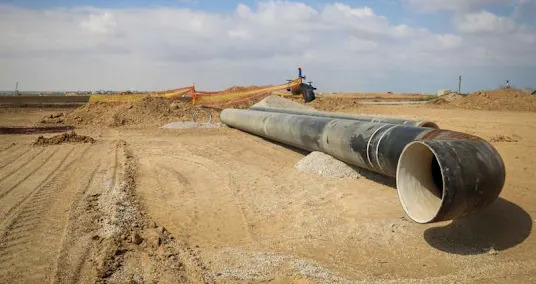
The post came in reply to a post from the United Nations Relief and Works Agency (UNRWA), saying that freshwater supplies in Gaza were "severely limited and polluted."
Gaza is receiving over 70,000 cubic meters of water per day, the Coordinator of Government Activities in the Territories (COGAT) claimed in an X/Twitter post on Sunday.
The post came in reply to a post from the United Nations Relief and Works Agency (UNRWA), saying that freshwater supplies in Gaza were "severely limited and polluted," due to a collapse in sewage infrastructure.
COGAT described UNRWA's claims as being "false narratives."
COGAT coordinates Gaza water line repair
"The facts speak for themselves," COGAT said. "When a water line issue was reported last week, we coordinated a rapid repair to restore full functionality immediately."
COGAT also said that there were four active pipelines leading into Gaza: Nahal Oz, Bani Suheila, Birkat Sa'id, and the Emirati line.
"While local groundwater faces challenges, we continue to repair infrastructure, even during combat, to ensure civilians access to safe, potable water," COGAT claimed.
LATEST POSTS
- 1
 Deadly attack on kindergarten reported in Sudan
 - 2Spain's Easter processions draw more tourists amid Iran war
- 3'We are ready': NASA still on track to launch Artemis 2 astronauts to the moon April 1
- 4Opening Achievement: 8 Methodologies for Compelling Using time productively
- 5Nature's Best: A Manual for Beautiful Train Rides





- Why the weirdest sea level changes on Earth are happening off the coast of Japan
- Tablets: Upgrade Your Understanding Experience
- The pinch at the pump continues on
- Becoming the best at Discussion: Individual Procedures
- Instructions to Decide the Best SUV Size for Seniors
- Collierville residents with no power as temperatures plunge
- Pick Your Number one Sort Of Music
- Newly Identified ‘Lucy’s Hunter’ Was a 15-Foot Crocodile Lurking in Ancient Ethiopia
- A volcanic eruption may have catalyzed the plague's arrival in Europe, study suggests