Hello! I’m Fortesa Latifi, a senior writer at Yahoo, and my first book, Like, Follow, Subscribe, about the child influencer industry, comes out on April 7. To celebrate the publication of my book, I’m launching a limited-run column to answer your burning questions about the ins-and-outs of this world.
Last week, I wrote about how more and more parents are keeping their kids offline, which can make for complicated conversations with loved ones. Here’s another question I received: “It seems like things can’t get more dystopian in this industry. What do you think is next for child influencers and family vlogging?”
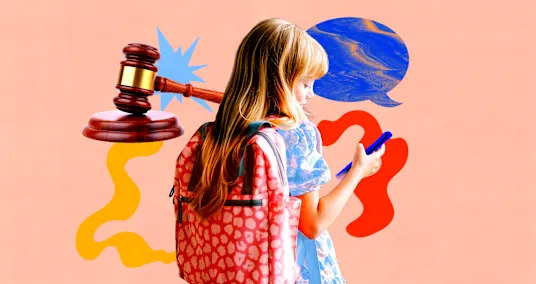
The world of child influencers and family vloggers is shifting underneath our feet right now. Many parents still dream of turning content creation into a full-time job — but the risks are getting harder to ignore, and a public backlash is brewing. At the same time, legislative and technological changes are starting to reshape the space. So, where does it all go from here? Let’s dig in.
As we touched on last week, more and more parent influencers are choosing to take their kids offline or limit their involvement in publicly shared content. Creators as big as Maia Knight, who has 7.6 million TikTok followers, and Avery Woods, who has 2.6 million TikTok followers, have chosen to stop showing their kids offline after building platforms based off of sharing them. Increasingly, regular moms and dads without huge audiences are also pulling their kids offline — and feeling good about their decision, given all the thorny ethical issues it raises.
Many parents still dream of turning content creation into a full-time job — but the risks are getting harder to ignore, and a public backlash is brewing.
Lawmakers, too, are beginning to take notice of the largely unregulated family influencer industry. Five states – Illinois, Minnesota, California, Utah and Virginia – have passed laws related to the earnings of child influencers, and many more states have introduced similar legislation.
Child influencers are often compared to child actors, but content creation is much tougher to regulate. The work of paid performers is contained to a set, where crew are responsible for making sure that labor laws are being enforced — that the child is only working a certain number of hours and has time for lunch breaks and schooling. None of that exists for child influencers. Their parents are their caretakers, as well as their employers and managers.
Even “work” in this context is slippery to define. If the end result is a 30-second Instagram reel, how do you quantify the hours of work that go into influencing — the filming, the retakes, the editing, the pressure to perform?
The laws often rely on complicated formulas for mandating how much money is to be set aside for children, based on how much money posts earn; the percentage of the content in which the child appears; and, in some cases, the previous month’s revenue. Even for parents with the best intentions, following the letter of the law is daunting. I dedicate an entire chapter of my book to this new wave of legislation and whether or not it will make a meaningful difference.
If the end result is a 30-second Instagram reel, how do you quantify the hours of work that go into influencing — the filming, the retakes, the editing, the pressure to perform?
Meanwhile, the backlash against family vloggers and mom influencers is gaining momentum, as more former child influencers speak out about their experiences and critics raise the alarm about exploitation and abuse. There was also the disturbing case of YouTuber Ruby Franke, who, in 2023, was arrested and charged with multiple counts of aggravated child abuse. When the horrific details came out, it confirmed many people’s worst suspicions of what happens behind the scenes of family vlogs.
Looming over all of this is the unsettling threat of AI, with many parents worried about how their child’s image or likeness can be manipulated once it’s out there. Human Rights Watch reported that children’s personal photos are being used to build AI tools, which are in turn used to create deepfakes, while the New York Times has written about the wide availability of AI apps that can now create deepfake nudes at the touch of a button.
In one case last year, a Pennsylvania man plead guilty to having AI-generated child sex abuse material, according to CBS News. The possibility of AI-driven abuse kept coming up in my conversations with parents. If a single image can be the basis of exploitation and abuse, it’s horrifying to think of what can be created with the thousands of videos and images of child influencers that are readily accessible.
However, despite the backlash, the scandals and the advancement of technology, the rise of family vloggers and mom influencers doesn’t seem to be slowing. There are still family vloggers trying to hit the viral lottery every single day, who hope to change their lives by monetizing every detail of their — and their children’s — lives. It’s not uncommon for influencer kids’ online footprint to start in utero, with parents posting about their unborn child from the womb. The amount of money in this industry is staggering, with the top strata of creators raking in millions of dollars a year.
When parents are looking around at their options for making a living and see creators making more than their yearly salary from a single brand deal, I can see why choosing to trade privacy for financial stability can be tempting. And that might be the most dystopian part of it all — in 2026, you can sell anything. Even yourself and your family.
LATEST POSTS
- 1
 'Stranger Things' series finale trailer shows Hawkins gang gearing up for last battle with Vecna
 - 2Women take pride in Holy Week roles after a Spanish Catholic brotherhood's procession excluded them
- 3Watch the Geminid meteor shower peak tonight from the comfort of home with this free livestream
- 4I’m a doctor. Here are 10 science-backed tips to help you get healthier.
- 5Forum Dvorah demands clear support for women in combat as IDF gender debate escalates




- Transcript: Scott Gottlieb on "Face the Nation with Margaret Brennan," Dec. 7, 2025
- Cyber Monday streaming deals 2025: Grab the Disney+ Hulu bundle for only $5 and save over 60%
- Nearly 16,000 New York City nurses prepare to strike as contract talks stall
- Heavenly Pastry Confrontation: Pick Your #1 Sweet Treat!
- Support Your Body: A Manual for Smart dieting and Sustenance
- A Concise History Of The Entertainment world
- Find the Insider facts of Viable Advertising: Building a Positive Brand Picture
- The Magnificence of Extraordinariness: Presenting Valuable Adornments and Gemstones
- Revealing the Incomparable Realms: An Excursion through Power and Inheritance


