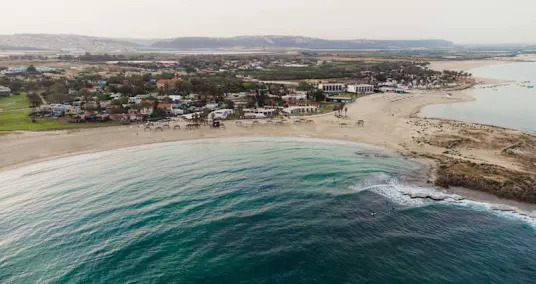
The discovery was made in an ancient shipwreck in the Dor Lagoon near the Carmel Coast, where archaeologists recovered nine pieces of unprocessed iron known as “blooms.”
Researchers from the University of Haifa said Wednesday that an underwater excavation off Israel’s northern Mediterranean coast uncovered what they described as the earliest known cargo of raw iron transported by ship, dating back around 2,600 years, Xinhua reported.
The discovery was made in an ancient shipwreck in the Dor Lagoon near the Carmel Coast, where archaeologists recovered nine pieces of unprocessed iron known as “blooms.” According to the university, the find provides direct evidence of how iron was transported in its earliest commercial stages.
The material was preserved in its original form, having solidified directly in a smelting furnace without undergoing forging or further refinement. Researchers said this distinguishes the cargo from later iron artifacts that typically show signs of shaping or tool-making.
Unlike copper and bronze, which could be melted into liquid form in ancient production processes, iron was heated with charcoal to produce a solid, porous mass. That mass was generally hammered to remove impurities and create denser material suitable for tools and implements.
The recovered blooms showed no indication of that secondary processing stage, suggesting they were transported immediately after production.

Earliest iron shipment discovered in ancient Mediterranean wreck
To determine the age and condition of the cargo, researchers conducted microscopic and chemical analyses.
Radiocarbon dating was also carried out on charred wood embedded in one of the pieces, helping confirm the timeline of the shipment. The findings were published in the journal Heritage Science.
Researchers said the cargo indicates that iron was being moved in raw form from production sites to other locations for further processing, pointing to a level of specialization in ancient manufacturing and trade networks in the Mediterranean.
The University of Haifa said the discovery provides new insight into early iron production and distribution practices in the region.
LATEST POSTS
- 1
 Remains of banker missing since 1999 found on California beach by family looking for seashells
 - 2Dominating Monetary Administration: A Bit by bit Manual for Making an Individual Financial plan
- 3Interstellar comet 3I/ATLAS to pass closest to Earth on Friday
- 4One spent $20 on candy. Another paid $700 for a custom costume. Here's how Halloween costs stacked up this year.
- 5'War is not over': Detailed diagrams of prisons found in cells of Oct. 7 terrorists


- Outer space conditions hamper sperm's ability to navigate toward an egg
- 4 Jeep Models: Dominating Execution and Flexibility for Each Experience
- Novartis to build manufacturing hub in North Carolina, creating 700 jobs
- Man who grabbed Ariana Grande at 'Wicked: For Good' premiere also rushed Katy Perry onstage this year. Who is he and why is he doing this?
- 'The Golden Bachelor' Season 2 finale: How to watch tonight, start time, where to stream and more
- ‘Grit’ and relentless perseverance can take a toll on brain health − particularly for people facing social stresses like racism
- Greenland’s melting ice and landslide-prone fjords make the oil and minerals Trump is eyeing dangerous to extract
- Bruno Mars tour 2026: How to get tickets for 'The Romantic Tour,' presale times, prices and more
- Human evolution’s biggest mystery has started to unravel. How 2025 tipped the scales