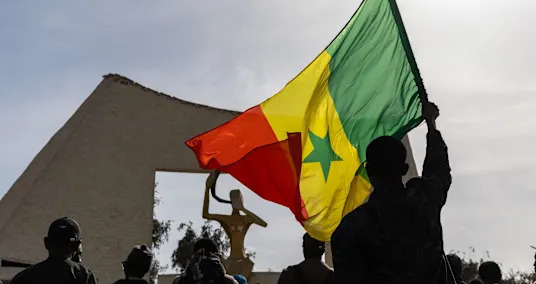
Senegal's President Bassirou Diomaye Faye has signed a new law doubling to 10 years the maximum prison term for sexual acts by same-sex couples.
The new law also criminalises the "promotion" of homosexuality, which includes any public representation and financial support by individuals or organisations, and provides for three to seven years in prison for those found guilty.
The legislation was a campaign promise of President Faye and Prime Minister Ousmane Sonko and was approved by parliament last month.
UN rights chief Volker Türk has described it as "deeply worrying", saying that the anti-LGBT legislation "flies in the face of sacrosanct human rights".
The UN official and rights groups had urged the president not to sign it into law, but the government dismissed the international criticism, arguing that the measures reflected the views of Senegalese people.
It was taken to parliament after a wave of arrests over alleged same‑sex relationships, which were already banned under Senegalese law.
In February, 12 men, including two public figures and a journalist, were arrested and charged with "acts against nature".
Campaign group Human Rights Watch has recently noted a rise in "hostility toward LGBT people", adding that MPs had twice – in 2022 and 2024 - unsuccessfully sought to raise jail terms and penalties against same-sex relationships.
The new law was passed by an overwhelming majority in the National Assembly on 11 March, with 135 MPs voting in favour, none against and three abstaining.
Several other African countries have also introduced tough new laws against the LGBTQ+ community in recent years.
In September last year, Burkina Faso's transitional parliament approved a bill banning homosexual acts, following its neighbour Mali in 2024.
In 2023, Uganda voted in some of the world's harshest anti-homosexual legislation, meaning that people engaging in same-sex relationships can be sentenced to death in certain circumstances.
Ghana is also planning to re-introduce an anti-homosexual bill that activists say threatens basic human rights, safety and freedom.
You may also be interested in:

Go to BBCAfrica.com for more news from the African continent.
Follow us on Twitter @BBCAfrica, on Facebook at BBC Africa or on Instagram at bbcafrica
BBC Africa podcasts
LATEST POSTS
- 1
 Popular Film Areas: A Worldwide Manual for Film Enchantment
 - 2The most effective method to Succeed in Your Web based Advertising Degree: Procedures for Progress
- 3Liste des pr\u00eats qui ne n\u00e9cessitent pas de remboursement
- 4How to identify animal tracks, burrows and other signs of wildlife in your neighborhood
- 5The most effective method to Explore Moral Situations in Brain research with Your Certification


- Pilot captures jaw-dropping northern lights show from 36,000 feet (photos)
- Step by step instructions to Pick A Pre-owned vehicle Stage
- Family Matters: Tips and Guidance for Effective Nurturing and Everyday Life
- The Development of Shipping: Controlling Towards a More Associated Future
- Glen Powell will host 'Saturday Night Live' with Olivia Dean as musical guest: What to know ahead of their debut
- Germany records first wolf bite on human since repopulation
- Becoming amazing at Systems administration: Individual and Expert Tips
- The Best Computer games for Multiplayer Fun
- Iran steps up executions as experts warn state killing being used to suppress political dissent